


In the plan to maintain the cultural heritage of the City of
Paris, this organ is among the four prestigious and
emblematic instruments, classified as Historic Monuments,
requiring a fundamental restoration.
Restoration issues
Built in 1771 by François-Henri Clicquot in a buffet dating
from 1757, reusing part of the piping of the earlier
instrument, the organ of the Church of SaintGermain-
l'Auxerrois was, before the Revolution, in the Sainte-
Chapelle. It was transferred in 1791 and its integration
into this new building was the subject of much debate.
The instrument underwent expansion work by Pierre and
François Dallery in 1792, followed by further
transformations in 1813, 1826 and 1840 by the Dallerys,
then in 1850 by Ducroquet, in 1865, 1881 and 1900 by
Merklin and in 1981 by Adrien Maciet. He never knew a
state that could be described as definitive.
Paradoxically, the prestige of the Saint-Germain-l'Auxerrois
church, parish of the kings of France, the fame of Clicquot,
the innovative design of the buffet and the richness of its
stylistic evolution, make this organ one of the most
interesting in the capital. To stop the inevitable
degradation of the organ, a conservatory operation was
carried out by the City of Paris in 2008 and entrusted to
the builder Laurent Plet. With the partial removal of the
piping, an inventory was carried out as part of a
preliminary study carried out by Christian Lutz, a
technician-counsel for the State.
The eventful history of the instrument today gives us a
great heterogeneity of heritage elements and makes the
definition of a future restoration complex. Long desired by
the organists of the last third of the twentieth century, the
return to the Clicquot organ can hardly be envisaged
because there are too few components of the organ of
1771 and one would lose a lot to subtract the more recent
elements of a certain quality.
In a desire to preserve all the old material in the organ
and to identify a real musical personality, two possibilities
will be presented to the National Commission of Historic
Monuments which will arbitrate on the final program:
•
The return to the composition of Merklin of 1881
•
A somewhat "classicized" composition
Expected work time: 24 months
Call to Patronage: 1140,000 euros, exclusive the costs related
to the project management, which will be borne by the City of
Paris.
Source




ORGANS OF PARIS © 2026 Vincent Hildebrandt HOME ALL ORGANS



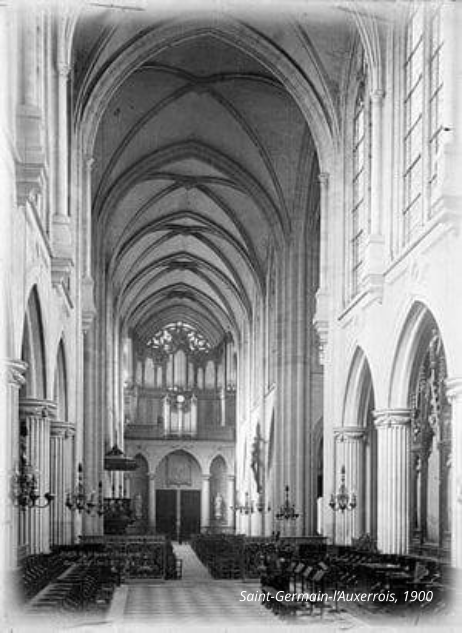
There’s so much that could be said about Saint-Germain-
de-l'Auxerrois, located right next to the Louvre with
foundations dating back to Merovingian times. In the
13th century, the portal, choir, and Virgin chapel were
built. The church was partly rebuilt in the 15th century,
including its porch. When the Valois court settled at the
Louvre, it became the royal parish church. From its bell
tower, the signal was given on the night of August 24,
1572, for the St. Bartholomew’s Day Massacre. During the
Revolution, the church was turned into a hay storage
warehouse, then a printing shop. Under the Second
Empire, Baron Haussmann created the Place du Louvre
and asked architect Hittorff to build a structure in the
same style as the church to house the 1st
arrondissement town hall. To complete the square’s
layout and provide a grand counterpoint to the Louvre,
Haussmann had a belfry erected, inspired by the nearby
Saint-Jacques tower on Rue de Rivoli.
(Text: Thierry Correard)
Five years ago, the Paris seminary moved into the presbytery.
The Maison Saint-Germain now occupies the building; the
seminary council meets there every Thursday with the rector,
and the whole seminary community gathers there for Mass
and lunch. The parish dimension remains and is supported
by Notre-Dame des Victoires, which takes care of Sunday
liturgies, children’s catechism, and requests for the
sacraments.
E4
The organ comes from the Sainte-Chapelle. It was built in
1771 by François-Henri Clicquot in a case built in 1756 and
1757 by the carpenter Lavergne after a drawing by Pierre-
Noël Rousset. It was a large 8 feet of four keyboards and
pedalboard.
1791
In 1790, the Sainte-Chapelle was deconsecrated, and the
parish of Saint-Germain-l’Auxerrois bought and reinstalled
the organ. Pipework from the old organs of the École
Militaire and the collegiate church of Saint-Honoré was
also incorporated. It was most likely moved by Pierre
Dallery (who had worked with François-Henri Clicquot
before his death in 1790).
1838–1841
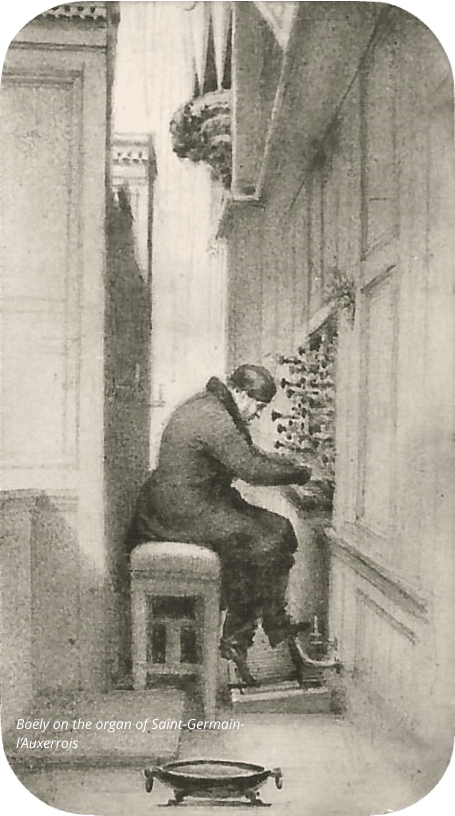
During the first half of the 19th century, the organ
underwent various changes, but between 1838 and 1841
Louis-Paul Dallery made major alterations: he changed the
stop list, rebuilt the wind system, and added a German-
style pedalboard for the organist at the time, Alexandre-
Pierre-François Boëly, who wanted to play Bach’s works.
The organ then had 36 stops. Dallery added a Bourdon 8′
to the Great, a Clarinet 8′ to the Positive, an English Horn
to the Swell, and extended the pedal by eight notes. It now
had four manual keyboards.
1847–1850
Ducroquet restored it, making significant changes: he
reduced it to three manuals, rebuilt the Great windchests,
created a new Swell box, and replaced the Positive Tierce
with a 4′ Salicional.
1864
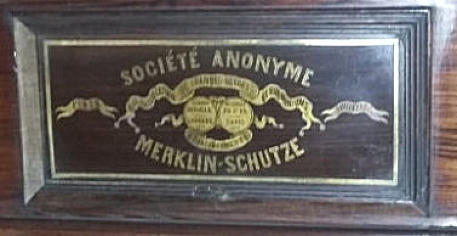
Joseph Merklin, who had taken over Ducroquet’s Paris
workshop, reworked it slightly. He gave the foundation
stops a flared voicing, but left most of the original reeds
intact—except the second Great Trumpet, which was
lowered to a 16′ Bombarde. He rebuilt the pedal windchest
and added a Barker lever machine for the Great and
couplers. The organ then had 35 stops across three
manuals and pedal.
1900
Gutschenritter carried out a major overhaul.
1970–1980
Adrien Maciet did various jobs, replacing the Positive’s
Salicional 8′, Flute 4′, and Clarinet 8′ with a Tierce, a
Cromorne, and two mixtures. He also restored Clicquot’s
second 8′ Trumpet, which Merklin had altered.
1995–2005
The deteriorating instrument fell silent. In 2005, Paris
builder Michel Goussu got it blowing again.
2008
Laurent Plet overhauled it. Maciet’s additions were
repositioned and revoiced, the original reeds were refitted
to restore Clicquot’s Grand Jeu, Merklin’s changes and
voicing were preserved and restored, and Ducroquet’s
Swell—now barely audible—was brought back to life.
Planned: An overhaul by the firm Jean-Baptiste Gaupillat.
22 out of 34 stops date back to the 18th century.
Similar to the organs at St. Roch and St. Laurent, this organ
has two faces: a classical face and a 19th century-face.





1771 - FH Clicquot (1)
1791 – Pierre Dallery (5)
1809 - François Dallery (6)
1827 - François et Paul Dallery (6)
1838 - Louis-Paul Dallery (5)
1850 - Ducroquet (3a)
1864 - Joseph Merklin (3a)
1900 - Joseph Gutschenritter (5)
1970/80 - Adrien Maciet (3b)
2005 - Michel Goussu (6)
2008 - Laurent Plet (4)
III/34 - mechanical traction (Barker GO)
Stoplist
Titular organist
Michael Matthes
Wiliam Gross et Victor Souza, suppléants
Organistes célèbres ayant illustré l’instrument :
Louis-Claude Daquin (around 1738), Alexandre Boëly (1840-
1851)
Parish website
Videos
Michael Matthes
Photos
Buffet : Jeroen de Haan
Eglise : Vincent Hildebrandt








The organs of Paris


E4
The organ comes from the Sainte-Chapelle. It was built in
1771 by François-Henri Clicquot in a case built in 1756 and
1757 by the carpenter Lavergne after a drawing by Pierre-
Noël Rousset. It was a large 8 feet of four keyboards and
pedalboard.
1791
In 1790, the Sainte-Chapelle was deconsecrated, and the
parish of Saint-Germain-l’Auxerrois bought and reinstalled
the organ. Pipework from the old organs of the École
Militaire and the collegiate church of Saint-Honoré was also
incorporated. It was most likely moved by Pierre Dallery
(who had worked with François-Henri Clicquot before his
death in 1790).
1838–1841
During the first half of the 19th century, the organ
underwent various changes, but between 1838 and 1841
Louis-Paul Dallery made major alterations: he changed the
stop list, rebuilt the wind system, and added a German-style
pedalboard for the organist at the time, Alexandre-Pierre-
François Boëly, who wanted to play Bach’s works. The organ
then had 36 stops. Dallery added a Bourdon 8′ to the Great,
a Clarinet 8′ to the Positive, an English Horn to the Swell, and
extended the pedal by eight notes. It now had four manual
keyboards.
1847–1850
Ducroquet restored it, making significant changes: he
reduced it to three manuals, rebuilt the Great windchests,
created a new Swell box, and replaced the Positive Tierce
with a 4′ Salicional.
1864
Joseph Merklin, who had taken over Ducroquet’s Paris
workshop, reworked it slightly. He gave the foundation stops
a flared voicing, but left most of the original reeds
intact—except the second Great Trumpet, which was
lowered to a 16′ Bombarde. He rebuilt the pedal windchest
and added a Barker lever machine for the Great and
couplers. The organ then had 35 stops across three manuals
and pedal.
1900
Gutschenritter carried out a major overhaul.
1970–1980
Adrien Maciet did various jobs, replacing the Positive’s
Salicional 8′, Flute 4′, and Clarinet 8′ with a Tierce, a
Cromorne, and two mixtures. He also restored Clicquot’s
second 8′ Trumpet, which Merklin had altered.
1995–2005
The deteriorating instrument fell silent. In 2005, Paris builder
Michel Goussu got it blowing again.
2008
Laurent Plet overhauled it. Maciet’s additions were
repositioned and revoiced, the original reeds were refitted to
restore Clicquot’s Grand Jeu, Merklin’s changes and voicing
were preserved and restored, and Ducroquet’s Swell—now
barely audible—was brought back to life.
Planned: An overhaul by the firm Jean-Baptiste Gaupillat.
22 out of 34 stops date back to the 18th century.
Similar to the organs at St. Roch and St. Laurent, this organ has
two faces: a classical face and a 19th century-face.
ORGANS OF PARIS © 2026 Vincent Hildebrandt


1771 - FH Clicquot (1)
1791 – Pierre Dallery (5)
1809 - François Dallery (6)
1827 - François et Paul Dallery (6)
1838 - Louis-Paul Dallery (5)
1850 - Ducroquet (3a)
1864 - Joseph Merklin (3a)
1900 - Joseph Gutschenritter (5)
1970/80 - Adrien Maciet (3b)
2005 - Michel Goussu (6)
2008 - Laurent Plet (4)
III/34 - mechanical traction (Barker GO)
Stoplist
Organiste titulaire
Michael Matthes
Wiliam Gross et Victor Souza, suppléants
Organistes célèbres ayant illustré l’instrument :
Louis-Claude Daquin (around 1738), Alexandre Boëly (1840-
1851)
Site de la paroisse
Vidéos
Michael Matthes
Photos
Buffet : Jeroen de Haan
Eglise : Vincent Hildebrandt

